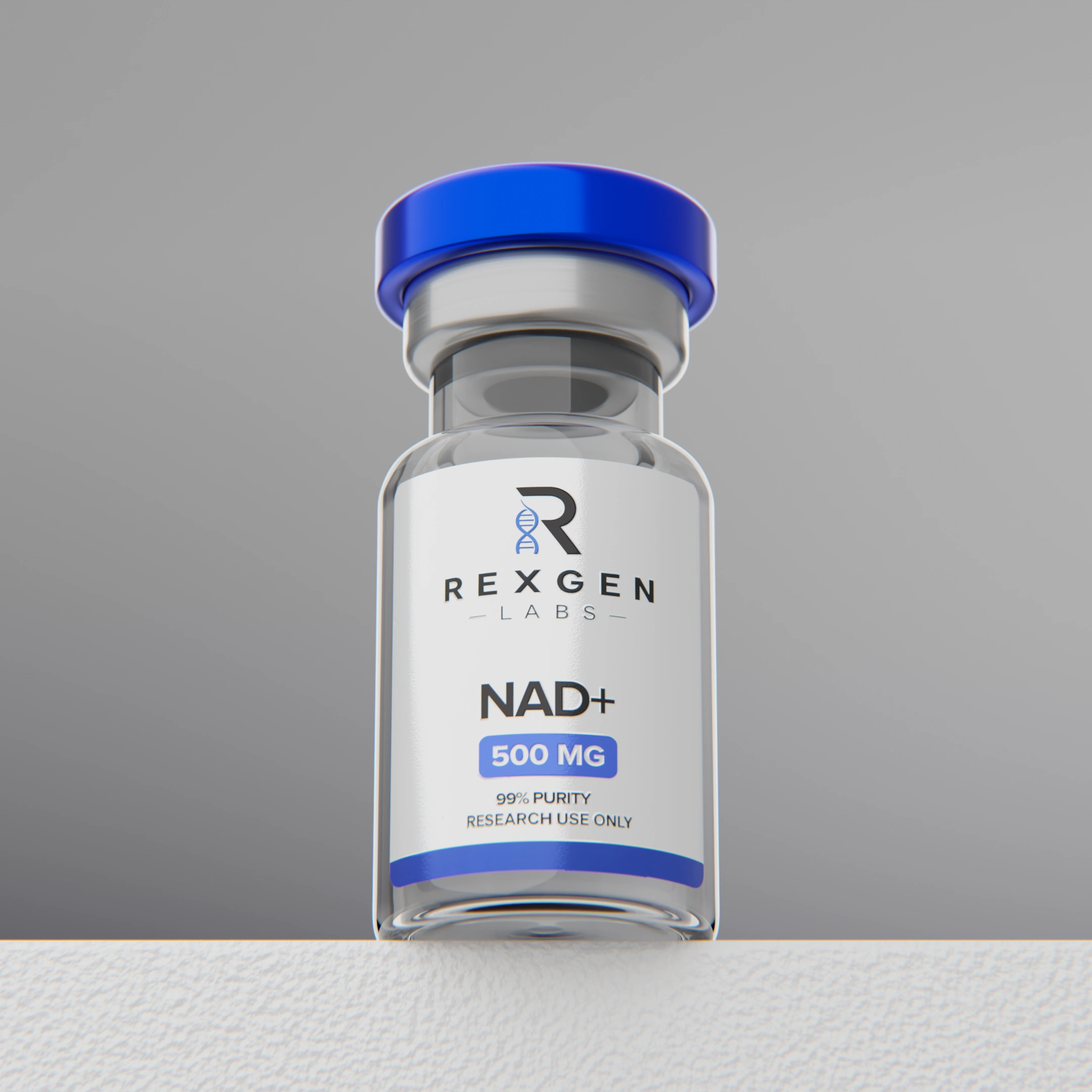
NAD+
$49.99$49.99

Bulk Discount Available
Save on multi-vial purchases
Choose Quantity
Vial quantity discounts automatically apply.
Choose a custom quantity
Pick 1-10 vials
1 Vials total
1 paid + 0 free
$63.99
Popular research compound

99%+ Purity
HPLC Verified
Lab Tested
U.S. Accredited Labs
Discreet Shipping
Secure Packaging
In Stock
Ships Same Day
43AA
SEQUENCE LENGTH
Active region of Thymosin Beta-4
80+
PUBLICATIONS
In wound healing & tissue repair
4.9kDa
MOL. WEIGHT
Small actin-binding protein
G-actin
MECHANISM
Sequesters monomeric actin
7-14days
STUDY DURATION
Typical research timeframe
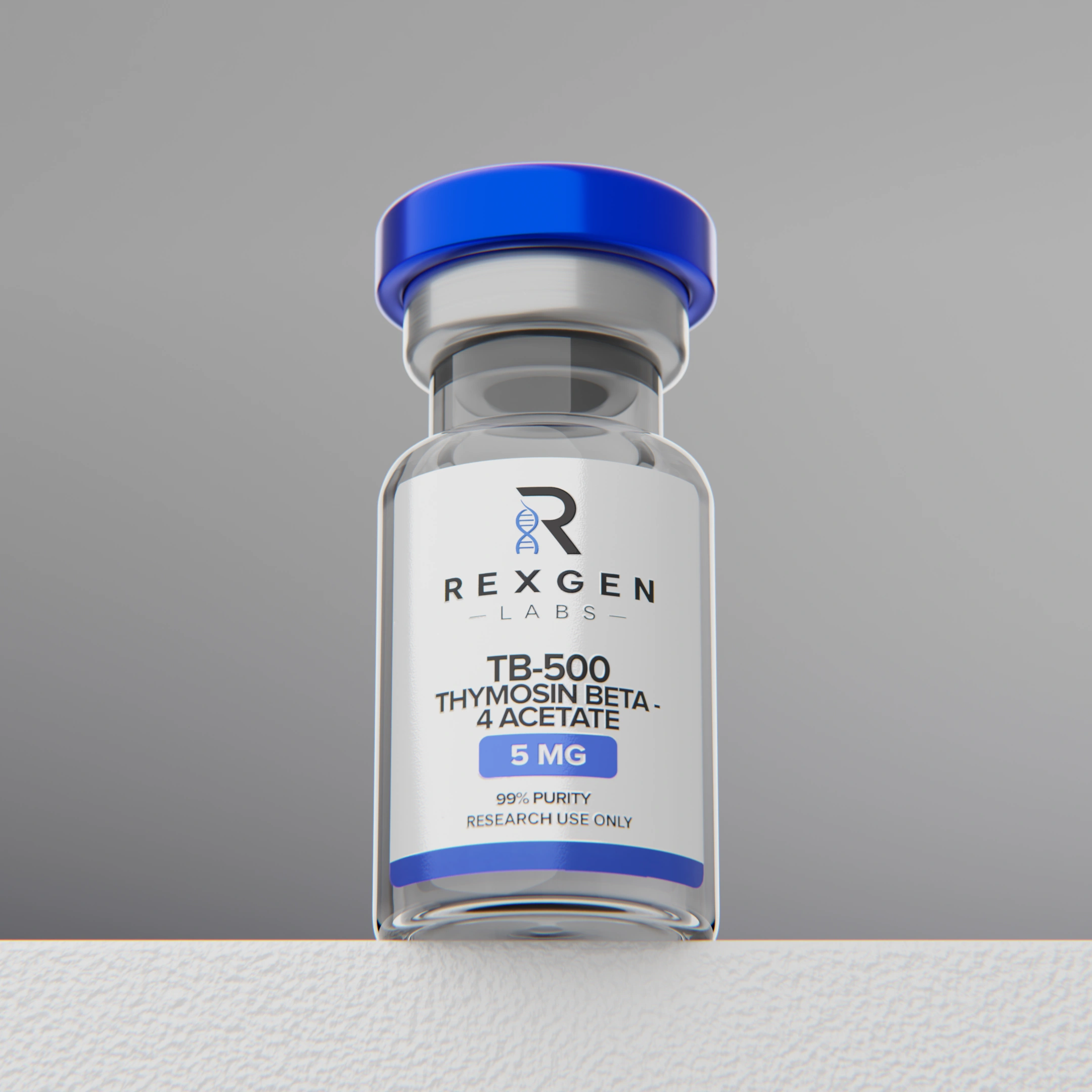
This listing supplies TB-500, the acetate salt of Thymosin Beta-4, as a lyophilized research peptide for in-vitro and preclinical laboratory work only. Thymosin Beta-4 (often abbreviated Tβ4) is a 43-residue, water-soluble peptide belonging to the beta-thymosin family and is one of the most abundant members of that family in the research literature. In laboratory shorthand the material is frequently referred to by the code TB-500, a designation historically used for synthetic beta-thymosin preparations studied in animal and cell-culture models. The compound carries CAS number 77591-33-4 and the molecular formula C212H350N56O78S, corresponding to a single sulfur-bearing methionine within an otherwise acidic, unstructured chain.
The defining structural motif of this peptide in the research literature is its actin-binding sequence. Beta-thymosins contain a short conserved segment (commonly written as the LKKTET-type motif) that mediates interaction with monomeric G-actin. Much of the mechanistic interest in TB-500 as a reference material stems from this actin-sequestering behavior, which places it among the tool compounds used to study cytoskeletal dynamics at the bench. The material is offered strictly as a characterized reference substance for that kind of controlled investigation and has no established consumer application.
Published work on Thymosin Beta-4 is predominantly in-vitro and rodent-model in nature and is best understood as mechanistic and hypothesis-generating rather than settled. The summaries below describe observations reported in laboratory systems only; they are not evidence of outcomes in humans or animals, and the research remains preliminary and ongoing.
For a 43-residue peptide, reproducible research depends on confirming both sequence fidelity and purity before the material enters an experiment. Each research lot is supplied as a lyophilized powder and characterized using orthogonal methods so that identity (confirmation the molecule is the correct sequence) is separated from purity (how much of the sample is the target peptide). Reversed-phase HPLC (RP-HPLC) quantifies chromatographic purity by peak-area integration, with lot purity reported on the Certificate of Analysis (COA) at ≥98%. The chromatogram resolves the main peak from process-related impurities and truncated sequences that can arise during synthesis of a chain this length.
Identity is confirmed by mass spectrometry (commonly ESI-MS or MALDI-TOF), which verifies that the observed mass matches the theoretical value for the C212H350N56O78S composition rather than a deletion or oxidation variant; the single methionine residue means oxidation state is one attribute worth confirming on the analytical record. Because TB-500 is supplied as an acetate salt, a lyophilized vial also contains counter-ion and residual water, so net peptide content can differ from gross fill weight. Researchers evaluating the material typically review the lot-matched COA for reported HPLC purity, the mass-spec identity confirmation, and net peptide content, and retain it alongside experimental records to support traceability and accurate stock-concentration calculations.
The following describes conventional handling of lyophilized research peptides and is not instruction for human or animal use. As a freeze-dried peptide, TB-500 is hygroscopic and sensitive to repeated temperature cycling. Standard laboratory practice is to allow sealed vials to equilibrate to room temperature before opening to minimize condensation on the powder, and to reconstitute with an appropriate research-grade solvent under aseptic technique. Aliquoting reconstituted stock into single-use portions limits freeze-thaw cycles that can degrade a long, unstructured peptide. Detailed temperature and stability windows for lyophilized, reconstituted, and working solutions appear in the storage table on this page, and handling should follow institutional chemical-safety procedures with appropriate PPE.