-15%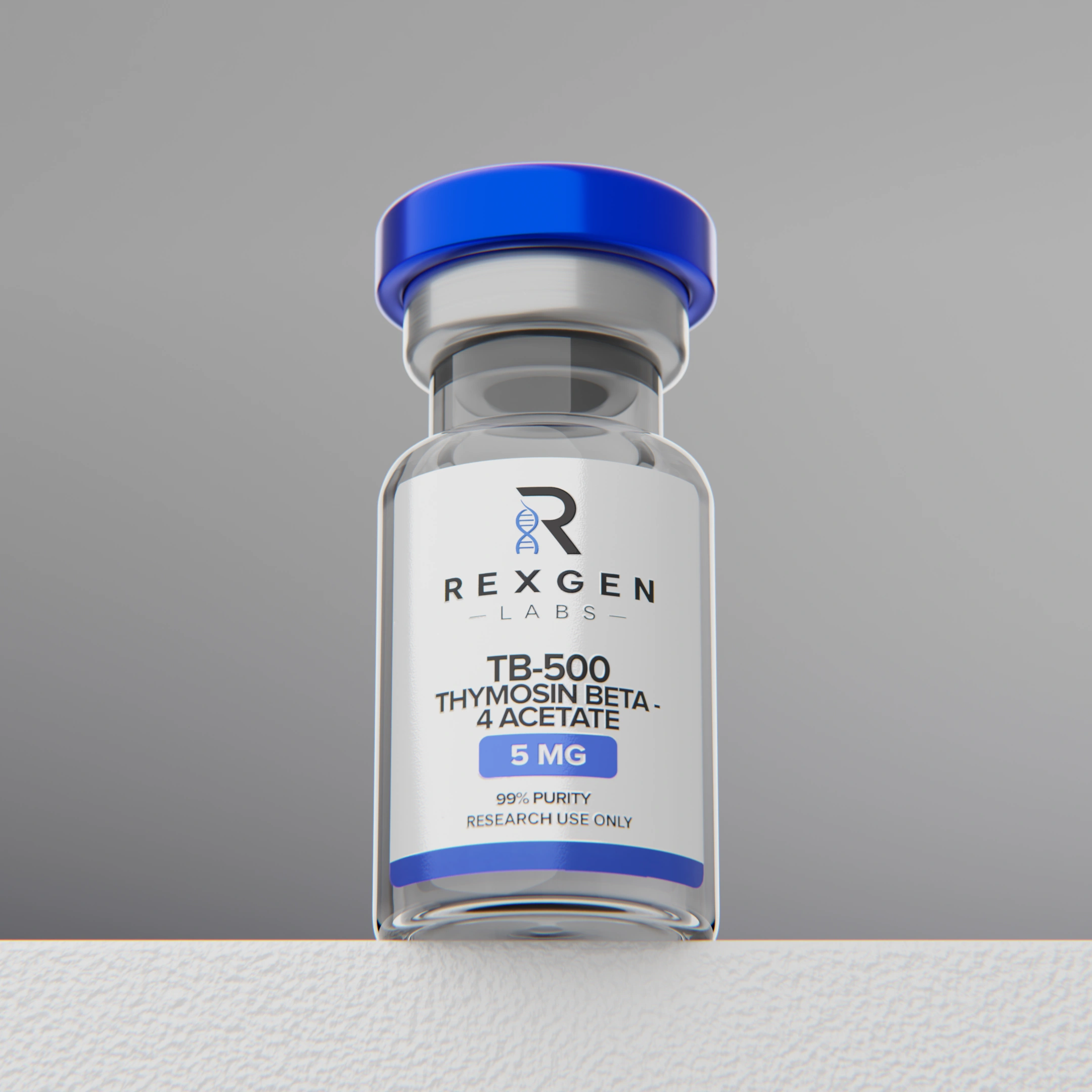
TB-500 (Thymosin B-4)
$63.99$74.99

Bulk Discount Available
Save on multi-vial purchases
Choose Quantity
Vial quantity discounts automatically apply.
Choose a custom quantity
Pick 1-10 vials
1 Vials total
1 paid + 0 free
$35.99
Popular research compound

99%+ Purity
HPLC Verified
Lab Tested
U.S. Accredited Labs
Discreet Shipping
Secure Packaging
In Stock
Ships Same Day
31AA
SEQUENCE LENGTH
Modified GLP-1 analogue
~7days
HALF-LIFE
Extended via albumin binding
3000+
PUBLICATIONS
Most studied GLP-1 RA compound
94%
HOMOLOGY
To native human GLP-1
2017
FDA APPROVED
For type 2 diabetes (Ozempic)
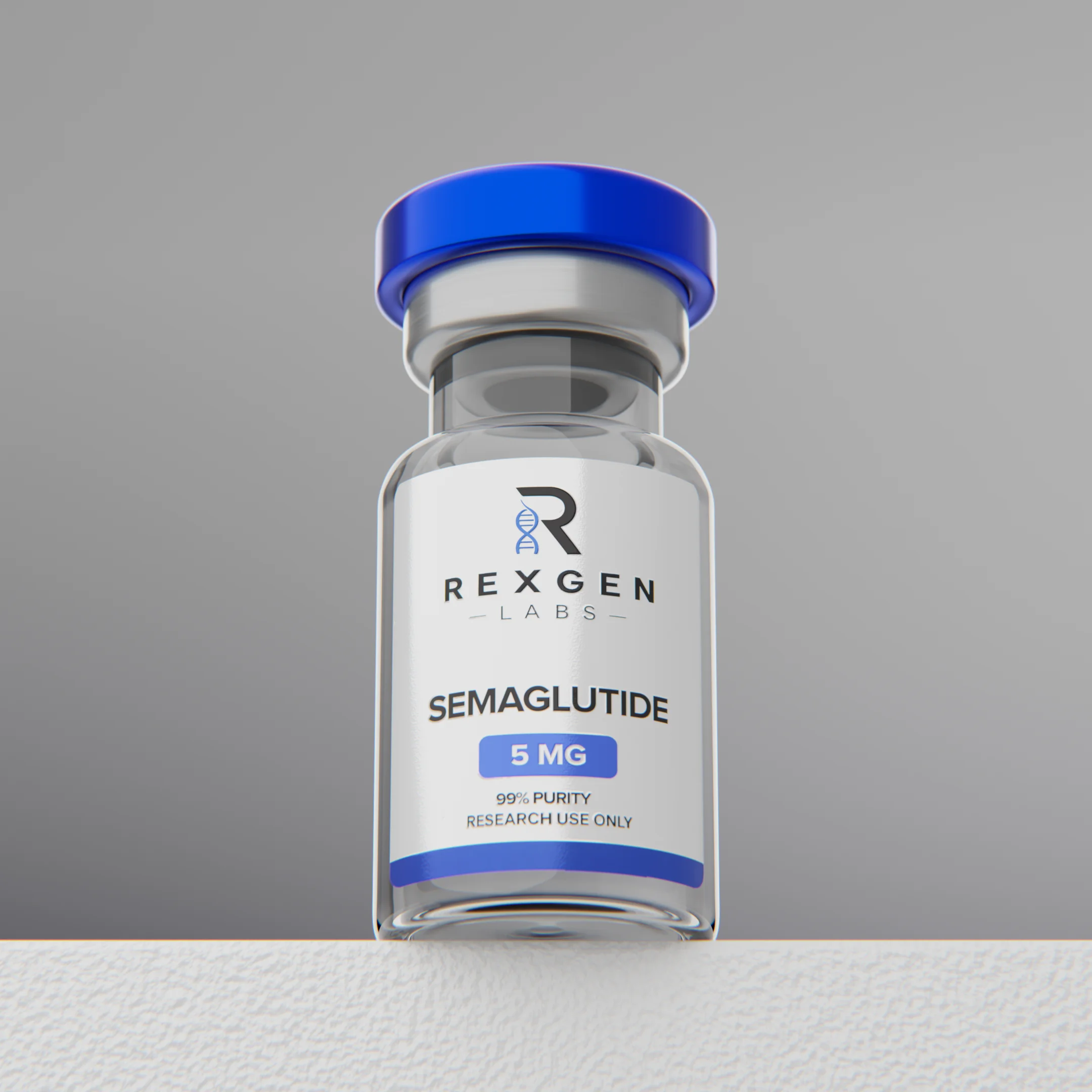
This listing supplies semaglutide (CAS 910463-68-2, molecular formula C187H291N45O59) as a lyophilized peptide reference material for in-vitro and preclinical laboratory work only. Semaglutide is a synthetic acylated analog of human glucagon-like peptide-1 (GLP-1), engineered from the GLP-1(7-37) backbone rather than isolated from a natural source. Its defining structural features, frequently cited in the research literature, are three deliberate modifications: substitution of alanine at position 8 with 2-aminoisobutyric acid (Aib) to hinder dipeptidyl peptidase-IV (DPP-IV) cleavage, an arginine substitution at position 34, and attachment of a C18 diacid fatty-acid chain through a gamma-glutamate/mini-PEG spacer to a lysine at position 26. Together these make it a substantially larger and more chemically complex molecule than native GLP-1, which is reflected in its high-molecular-weight formula and its handling requirements.
The material is intended for qualified researchers characterizing GLP-1 receptor pharmacology, peptide stability, and analog behavior on the bench. It is offered as a characterized reference compound only. All descriptions below concern the research substance itself, its documented study history in laboratory models, and standard handling of a freeze-dried peptide standard; none are statements about outcomes in humans or animals.
The preclinical and in-vitro literature around semaglutide centers on its identity as a GLP-1 receptor (GLP-1R) agonist and on the pharmacological consequences of its acylation and Aib substitution. The themes below are described strictly as observations in laboratory systems, are preliminary and ongoing, and do not establish effects in humans:
Because experimental parameters such as cell type, receptor construct, concentration range, and endpoint vary widely between reports, cross-study generalization is not supported by the current data. Researchers reviewing this literature typically treat it as mechanistic and hypothesis-generating; observations in isolated cells or animal models do not establish results in other biological systems. This information is educational only and is not medical advice.
Research Context
Findings summarized here derive from isolated-cell, receptor-pharmacology, and preclinical model studies. They are hypothesis-generating, have not been established as clinical outcomes, and are provided as neutral scientific background, not as a claim of safety or efficacy and not as medical advice.
For a modified 31-residue peptide bearing a lipophilic acyl side chain, analytical verification is central to reproducible results, because both sequence fidelity and correct fatty-acid conjugation must be confirmed. Research-grade semaglutide is typically assessed by reversed-phase high-performance liquid chromatography (RP-HPLC) to quantify chromatographic purity, reported as area-percent of the main peak; lots supplied here are specified at ≥99% purity. The chromatographic method resolves the target from related species such as truncated sequences and des-acyl impurities that lack the side chain.
Identity is confirmed by mass spectrometry (commonly ESI-MS or MALDI-TOF), matching the observed mass against the theoretical value for the C187H291N45O59 composition and thereby verifying both the peptide backbone and the presence of the C18 diacid modification rather than the unmodified analog. A lot-specific Certificate of Analysis (COA) documents these analyses. Because a lyophilized peptide vial contains counter-ion and residual water alongside the peptide, the net peptide mass can differ from the gross fill weight, so reviewing the lot-matched COA for purity, mass-spec identity, and net peptide content before use is standard practice and directly affects the accuracy of calculated stock concentrations.
The following describes conventional handling of lyophilized research peptides and is not instruction for human or animal use. Sealed semaglutide powder is kept cold, desiccated, and protected from light. Because the acylated peptide is amphiphilic and can be sensitive to surface adsorption and freeze-thaw cycling, sealed vials are generally equilibrated to room temperature before opening to limit condensation, then reconstituted under aseptic technique in a documented research-grade solvent. Aliquoting reconstituted stock into single-use portions limits repeated freeze-thaw that can degrade peptide integrity. Specific temperature and time windows for lyophilized, reconstituted, and working solutions appear in the storage specifications on this page.