-15%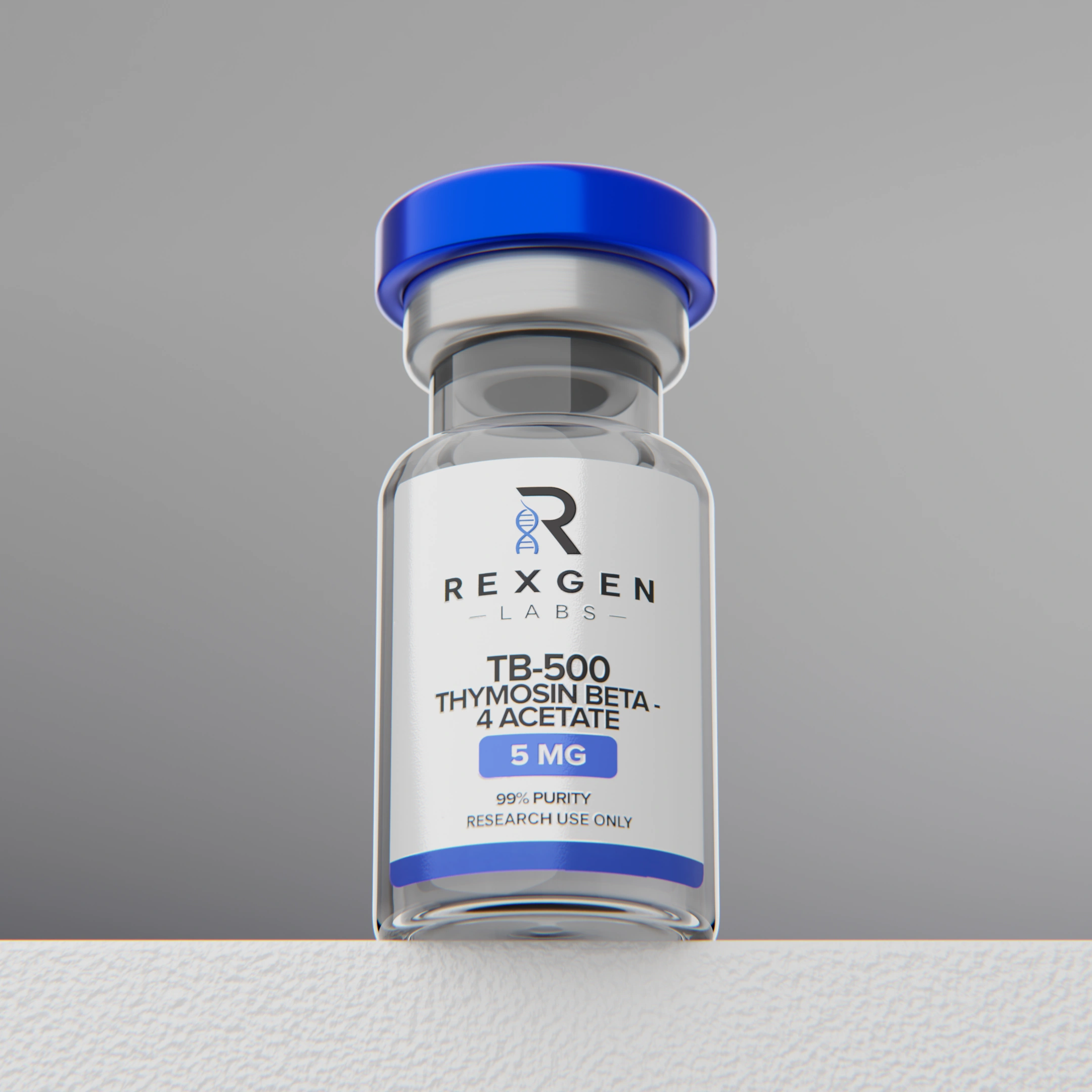
TB-500 (Thymosin B-4)
$63.99$74.99

Bulk Discount Available
Save on multi-vial purchases
Choose Quantity
Vial quantity discounts automatically apply.
Choose a custom quantity
Pick 1-10 vials
1 Vials total
1 paid + 0 free
$91.99
Popular research compound

99%+ Purity
HPLC Verified
Lab Tested
U.S. Accredited Labs
Discreet Shipping
Secure Packaging
In Stock
Ships Same Day
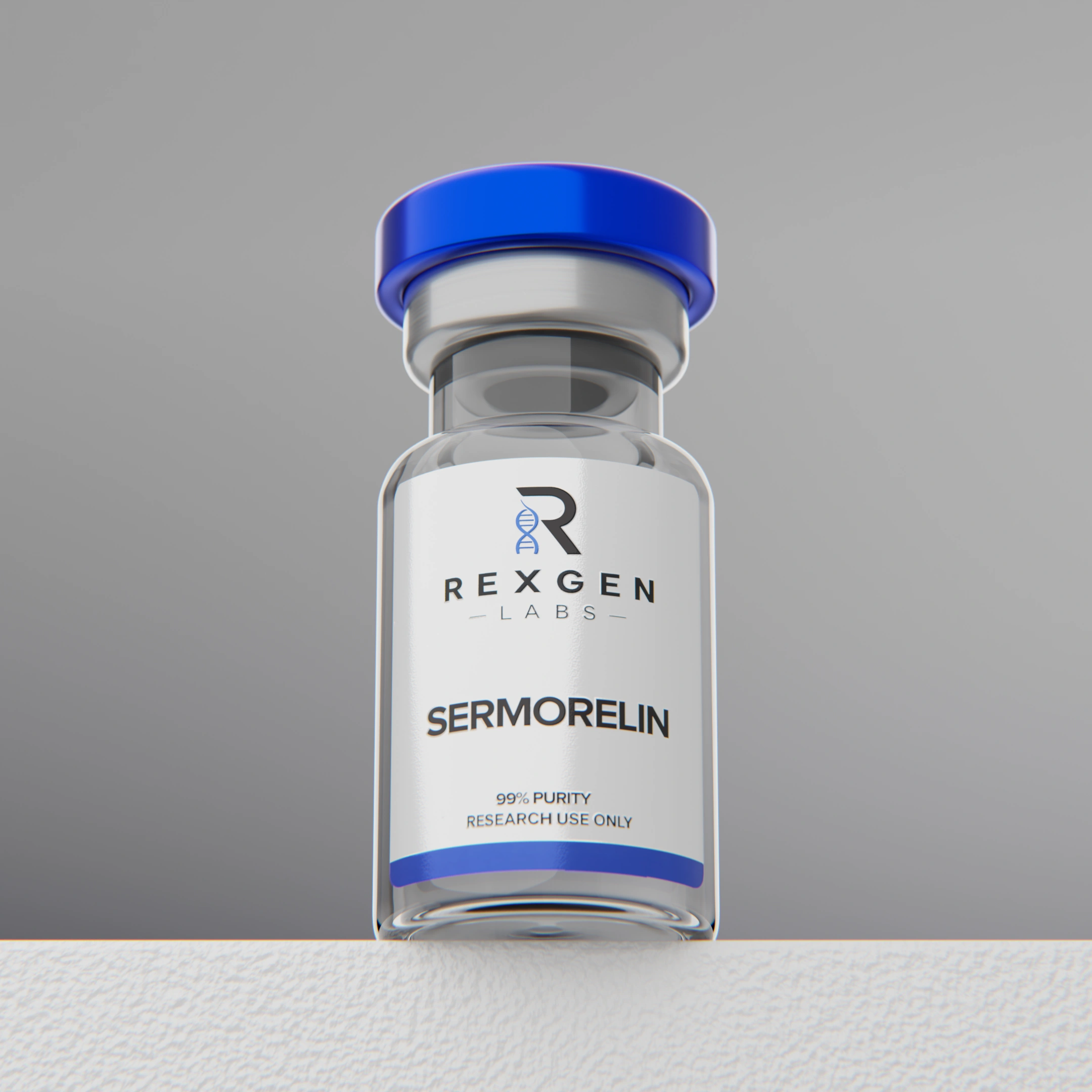
Sermorelin is a synthetic 29-amino-acid peptide amide (CAS 86168-78-7; molecular formula C149H246N44O42S) that corresponds to the biologically defined N-terminal fragment of growth-hormone-releasing hormone, and it is often written in the literature as GRF(1-29) or GHRH(1-29)-NH2. This 1-29 segment is the shortest sequence of the parent 44-residue hormone that retains the full receptor-recognition motif studied in vitro, which is why sermorelin became a standard reference peptide for investigating the growth-hormone-releasing hormone receptor (GHRHR). Supplied here at a 10 mg fill, it is intended strictly as an in-vitro and preclinical research material and has no consumer application.
As a truncated analog of the full-length hormone, sermorelin is a useful model for studying how structure maps to receptor engagement: researchers have used it to probe which residues in the 1-29 span drive binding at GHRHR, a class-B G-protein-coupled receptor. Because the C-terminus is amidated and the chain is comparatively short, sermorelin is frequently cited as a benchmark against which longer-acting or backbone-modified GHRH analogs are compared in enzymatic-stability and receptor-activation assays. The research surrounding it remains preliminary and ongoing, and observations from cell-based or rodent systems should not be extrapolated to human or animal outcomes. Nothing here constitutes medical advice.
Published investigations involving sermorelin are predominantly in-vitro and rodent-model in nature and center on the GHRH receptor signaling axis. Reported experimental lines of inquiry include receptor-binding and competition assays at GHRHR, cyclic-AMP accumulation as a downstream readout of class-B GPCR activation in transfected or pituitary-derived cell lines, and comparative degradation studies examining cleavage of the peptide by dipeptidyl peptidase-IV (DPP-IV), which acts near the N-terminus and is a recurring focus when GHRH analogs are characterized for enzymatic stability.
These references describe experimental laboratory work only. They are not medical claims, are not evidence of safety or efficacy in humans or animals, and should not be interpreted as guidance for any use outside a controlled research environment.
Each research lot is supplied as a lyophilized white powder and characterized before release so that the material described on the Certificate of Analysis (COA) matches the sequence and mass expected for the 29-residue peptide amide. Identity and purity are established with orthogonal analytical methods, which separates purity (how much of the sample is the target peptide) from identity (confirmation that the target is the correct molecule). Because sermorelin contains a single methionine residue, oxidation-related variants are among the process impurities that reversed-phase methods are designed to resolve from the main peak.
The COA accompanying each product is the definitive analytical record for that specific lot. Because purity and mass can vary slightly between synthesis batches, researchers should reference the COA tied to the lot number received rather than generic specifications when documenting experimental inputs, and retain it alongside experimental records to support reproducibility and traceability.
As a lyophilized peptide, sermorelin is hygroscopic and sensitive to repeated temperature cycling; its single methionine also makes it prudent to minimize prolonged exposure to air and light in solution. Standard laboratory practice is to allow sealed vials to equilibrate to room temperature before opening to reduce condensation, to reconstitute with an appropriate research-grade solvent under aseptic technique, and to aliquot the reconstituted stock into single-use portions so that freeze-thaw cycles are limited. Detailed temperature and stability windows for lyophilized, reconstituted, and working solutions appear in the storage table on this page.