-15%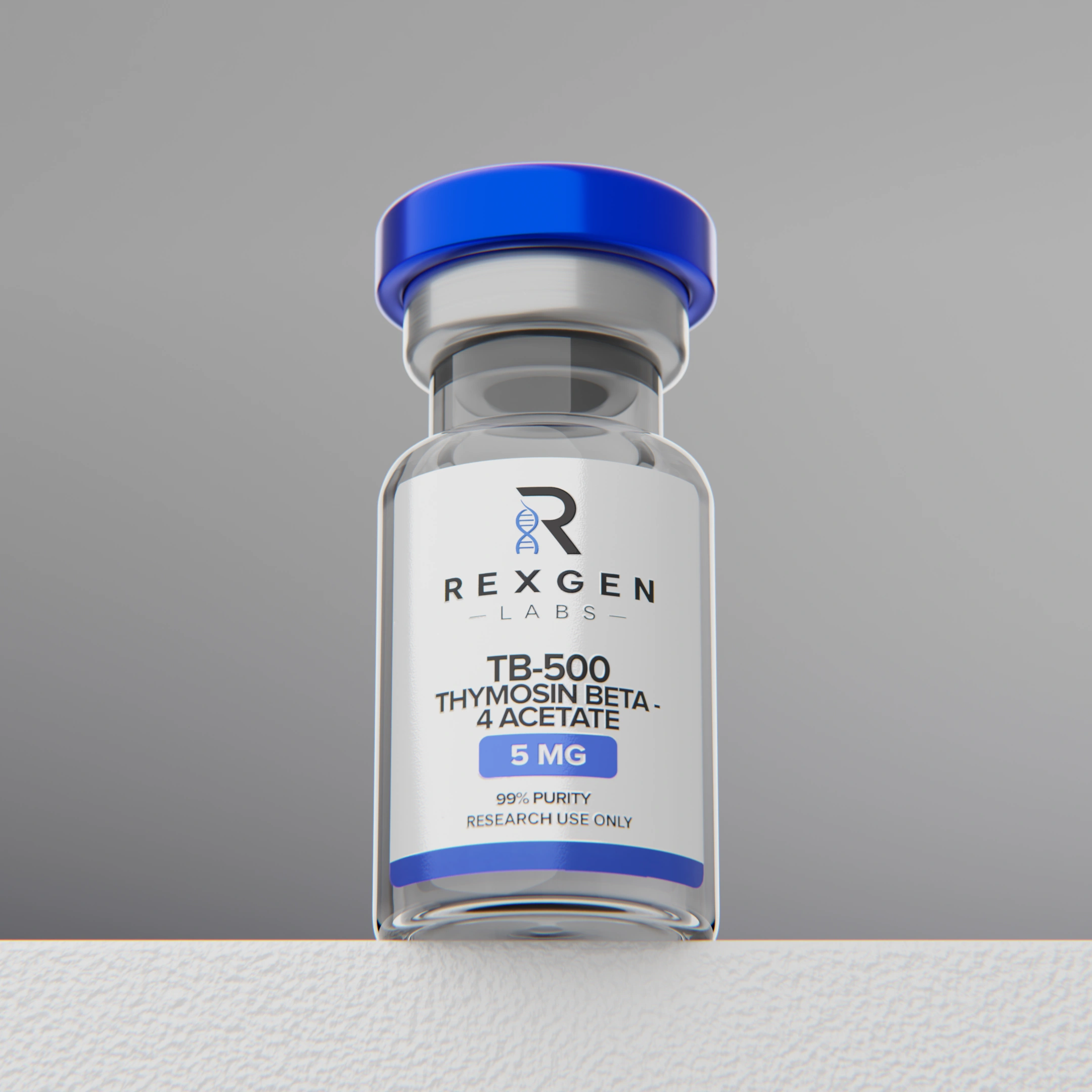
TB-500 (Thymosin B-4)
$63.99$74.99

Bulk Discount Available
Save on multi-vial purchases
Choose Quantity
Vial quantity discounts automatically apply.
Choose a custom quantity
Pick 1-10 vials
1 Vials total
1 paid + 0 free
$39.99
Popular research compound

99%+ Purity
HPLC Verified
Lab Tested
U.S. Accredited Labs
Discreet Shipping
Secure Packaging
In Stock
Ships Same Day
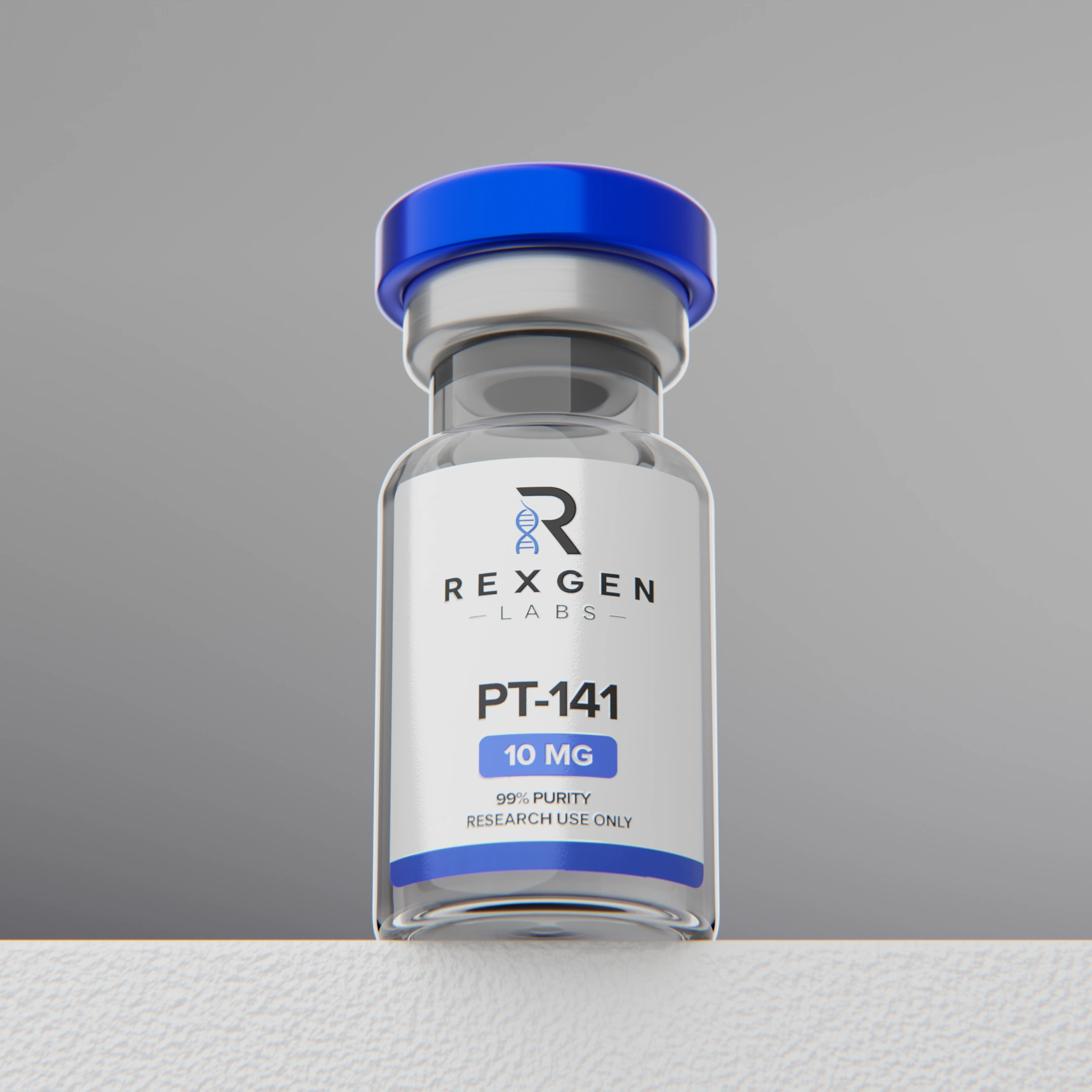
This listing supplies PT-141 (bremelanotide) as a 10 mg lyophilized research peptide for in-vitro and preclinical laboratory work only. PT-141 is a synthetic cyclic heptapeptide and a melanocortin-receptor ligand, structurally derived from the alpha-melanocyte-stimulating-hormone (alpha-MSH) family. It corresponds to the free-acid metabolite of the earlier melanocortin analog Melanotan II: where Melanotan II terminates in a C-terminal amide, PT-141 carries a carboxylic-acid terminus, a difference that distinguishes the two compounds analytically and is reflected in the molecular formula C50H68N14O10 and CAS 189691-06-3. The cyclic lactam bridge that constrains the peptide backbone is the defining structural feature investigators reference when characterizing it, because that ring rigidity is associated with its receptor-binding profile in laboratory assays.
In the research literature PT-141 is described as a non-selective melanocortin-receptor agonist, with reported activity at several receptor subtypes and particular interest in melanocortin-4 receptor (MC4R) and melanocortin-3 receptor (MC3R) engagement. Because it is categorized among hormone-pathway research compounds rather than as a simple structural peptide, it is typically studied as a tool for probing melanocortin G-protein-coupled-receptor (GPCR) signaling. The material offered here is intended solely as a characterized reference compound for that kind of controlled benchtop investigation, not for any other purpose.
The published work surrounding PT-141 is predominantly receptor-pharmacology and rodent-model research centered on the melanocortin system. The themes below are described strictly as observations in laboratory systems and are not statements about outcomes in humans or animals; the evidence base is preliminary and ongoing rather than settled.
For a cyclic peptide bearing a free-acid terminus, analytical verification is central to reproducible results because both sequence fidelity and correct cyclization must be confirmed. Research-grade PT-141 is typically assessed by reversed-phase high-performance liquid chromatography (RP-HPLC) to quantify chromatographic purity, reported as the percentage of the main peak; lots on this listing are specified at greater than or equal to 99 percent. The chromatogram is used to resolve the target from process-related impurities, linear (uncyclized) sequences, and — importantly for this molecule — the amidated Melanotan II analog, which differs by a single terminal modification.
Identity is confirmed by mass spectrometry (commonly ESI-MS or MALDI-TOF), matching the observed mass against the theoretical value for the C50H68N14O10 composition (average molecular weight near 1025 g/mol for the free-acid form). This confirms both molecular identity and that the material is the carboxylic-acid PT-141 rather than the amidated parent. A lot-specific Certificate of Analysis (COA) documents these analyses along with net peptide content, since counter-ion (typically acetate) and residual water in a lyophilized powder mean the peptide mass in a given vial can differ from the gross fill weight. Confirming these figures against a current, lot-matched COA before use is standard practice and directly affects the accuracy of experimental concentrations.
The following describes conventional handling of lyophilized research peptides and is not instruction for human or animal use. As a freeze-dried powder, PT-141 is hygroscopic and sensitive to repeated temperature cycling, so sealed vials are allowed to equilibrate to room temperature before opening to minimize condensation. Reconstitution is performed with an appropriate research-grade solvent under aseptic technique, and reconstituted stock is commonly aliquoted into single-use portions to limit freeze-thaw cycles that can degrade peptide integrity. Detailed temperature and stability windows for lyophilized, reconstituted, and working solutions appear in the storage table elsewhere on this page. All handling follows standard institutional chemical-safety practice.